

Introduction
In today’s competitive market, having a great product or service is no longer enough. Customers are constantly exposed to thousands of brands every day, making it essential for businesses to stand out and create memorable experiences.
A strong brand identity helps businesses build trust, attract customers, and establish long-term recognition. Whether you’re launching a startup, building a personal brand, or growing an established company, a clear and consistent brand identity can become one of your most valuable business assets.
In this guide, we’ll explore the key elements of brand identity and how to build a brand that customers remember and trust.
What Is Brand Identity?
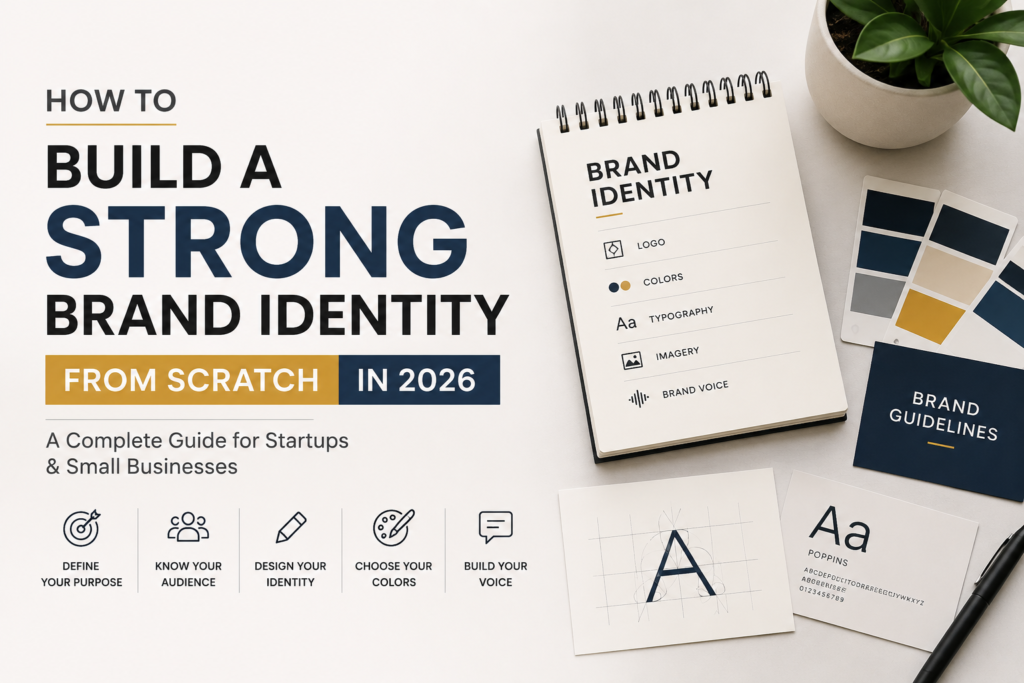
Brand identity is the collection of visual, verbal, and emotional elements that represent your business.
It includes:
- Logo
- Typography
- Color palette
- Brand voice
- Messaging
- Website design
- Social media presence
A strong brand identity creates consistency across every customer interaction and helps people instantly recognize your business.
Why Brand Identity Matters
Many businesses underestimate the impact of branding.
A professional brand identity can:
- Increase customer trust
- Improve brand recognition
- Differentiate your business from competitors
- Support marketing efforts
- Create customer loyalty
Companies with strong branding often appear more credible and professional, even when competing against larger organizations.
Step 1: Define Your Brand Purpose
Before designing a logo or choosing colors, you must understand why your business exists.
Ask yourself:
- What problem do we solve?
- Who do we serve?
- What makes us different?
- What values do we represent?
A clear purpose provides the foundation for every branding decision.
Step 2: Identify Your Target Audience
Your brand should be built around the people you want to attract.
Consider:
- Age groups
- Industries
- Locations
- Interests
- Pain points
Understanding your audience helps you create branding that resonates with the right customers.
Step 3: Create a Memorable Logo
Your logo is often the first thing customers notice about your business.
A good logo should be:
- Simple
- Memorable
- Versatile
- Scalable
- Timeless
Avoid overly complicated designs that may become outdated quickly.
Step 4: Choose the Right Typography
Typography plays a significant role in brand perception.
Different font styles communicate different messages:
Serif Fonts
Serif fonts often communicate:
- Trust
- Authority
- Tradition
Sans Serif Fonts
Sans serif fonts typically represent:
- Modernity
- Simplicity
- Innovation
Display Fonts
Display fonts are often used for:
- Creative brands
- Headlines
- Unique visual identities
Choosing consistent typography helps strengthen brand recognition across all platforms.
Step 5: Build a Consistent Color Palette
Colors influence how customers perceive your brand.
Common associations include:
- Blue: Trust and reliability
- Green: Growth and sustainability
- Red: Energy and passion
- Black: Luxury and sophistication
- Orange: Creativity and enthusiasm
Select a primary color and supporting colors that reflect your brand personality.
Step 6: Develop a Brand Voice
Your brand voice is how your business communicates.
Ask yourself:
- Should we sound professional?
- Friendly?
- Innovative?
- Authoritative?
Consistency in communication helps customers connect with your brand more effectively.
Step 7: Create Brand Guidelines
Brand guidelines ensure consistency.
They should include:
- Logo usage rules
- Typography standards
- Color codes
- Voice and messaging guidelines
- Social media standards
These guidelines help maintain a unified brand experience across all channels.
Step 8: Build a Professional Website
Your website is often the center of your brand identity.
A professional website should:
- Load quickly
- Be mobile-friendly
- Use consistent branding
- Clearly communicate your value proposition
- Guide visitors toward action
A poorly designed website can undermine even the strongest branding efforts.
Common Branding Mistakes to Avoid
Many businesses make branding mistakes that weaken their image.
Avoid:
- Inconsistent visuals
- Generic logos
- Too many fonts
- Poor color choices
- Unclear messaging
- Copying competitors
Strong brands focus on authenticity and consistency.
Tools That Can Help Build Your Brand
Several tools can simplify the branding process.
Popular options include:
- Canva
- Figma
- Adobe Illustrator
- Adobe Express
- Affinity Designer
These tools help businesses create logos, marketing materials, social media graphics, and brand assets.
Future Branding Trends in 2026
Branding continues to evolve.
Key trends include:
- Minimalist design
- AI-assisted branding
- Personalized customer experiences
- Authentic storytelling
- Strong typography systems
- Mobile-first branding
Businesses that adapt to changing customer expectations will be better positioned for long-term success.
Frequently Asked Questions (FAQs)
What is brand identity?
Brand identity is the collection of visual and communication elements that represent a business, including logos, colors, typography, messaging, and overall design.
Why is branding important for small businesses?
Branding helps businesses build trust, attract customers, and differentiate themselves from competitors.
How much does professional branding cost?
Branding costs vary depending on project scope, business size, and requirements. Professional branding is typically viewed as a long-term investment.
What is the difference between a logo and brand identity?
A logo is one part of a brand identity. Brand identity includes the logo, colors, typography, messaging, voice, and customer experience.
How often should a business update its branding?
Most businesses should review their branding every few years and update it when market conditions, customer expectations, or business goals change.
Can small businesses compete with large brands?
Yes. Strong branding, consistent messaging, and excellent customer experiences can help small businesses compete effectively.
Final Thoughts
Building a strong brand identity is one of the most important investments a business can make.
A clear purpose, memorable visuals, consistent messaging, and professional execution can help businesses attract customers, build trust, and create lasting recognition.
Whether you’re launching a startup or refreshing an existing business, strong branding provides the foundation for long-term growth and success.
Need Professional Branding Support?
DesignStag helps businesses create professional brand identities, custom typography, websites, marketing assets, and digital experiences that drive growth and recognition.