
Introduction
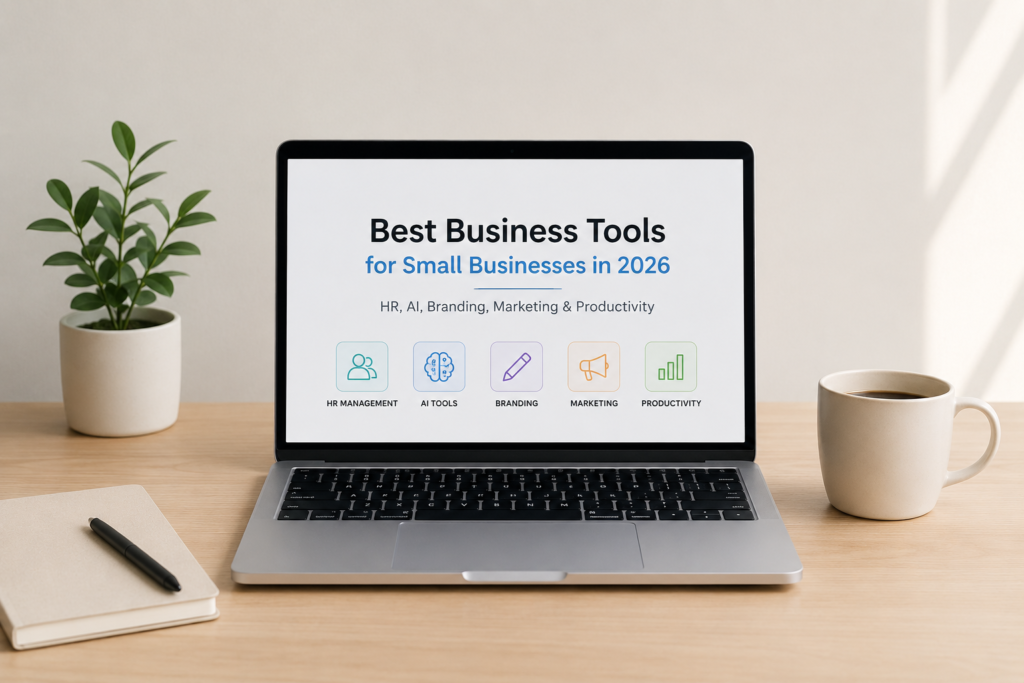
Running a small business in 2026 is more challenging than ever. Business owners must manage employees, maintain customer relationships, market their products, build strong brands, and stay productive in an increasingly competitive environment.
Fortunately, modern business tools make it easier to streamline operations, automate repetitive tasks, and improve overall efficiency.
Whether you’re a startup founder, agency owner, consultant, or growing business, investing in the right technology can save time, reduce costs, and accelerate growth.
In this guide, we’ll explore the most important business tool categories and highlight some of the best solutions available today.
Why Business Software Matters More Than Ever
Today’s businesses face several challenges:
- Managing remote and hybrid teams
- Handling repetitive administrative tasks
- Improving customer experiences
- Building a recognizable brand
- Staying competitive in a rapidly changing market
The right software allows businesses to spend less time on administration and more time on growth.
HR Management Tools: Building a Strong Workforce
Human resources play a critical role in every successful business. As teams grow, managing employee records, attendance, payroll, onboarding, and performance reviews manually becomes increasingly difficult.
Modern HR software helps businesses automate these tasks while improving employee experience and compliance.
Some of the most popular HR management platforms include BambooHR, Deel, Rippling, Zoho People, and Gusto.
Benefits of HR Software
- Centralized employee information
- Automated attendance tracking
- Simplified payroll management
- Faster onboarding processes
- Improved workforce visibility
For businesses with remote employees or international teams, platforms like Deel and Rippling can significantly simplify workforce management.
AI Tools: The New Business Assistant
Artificial Intelligence is transforming how businesses operate. Tasks that once required hours of manual work can now be completed in minutes using AI-powered tools.
Businesses use AI for:
- Content creation
- Customer support
- Research
- Data analysis
- Workflow automation
Popular AI tools include ChatGPT, Claude, Perplexity AI, Jasper AI, and Grammarly.
How AI Helps Small Businesses
AI can help business owners:
- Create blog content faster
- Draft marketing materials
- Improve customer communication
- Generate ideas and strategies
- Analyze business information efficiently
Businesses that embrace AI often gain a competitive advantage by reducing costs and increasing productivity.
Branding Tools: Creating a Professional Business Identity
Strong branding helps businesses stand out in crowded markets. Customers are more likely to trust companies that present a consistent and professional image.
Branding includes:
- Logo design
- Typography
- Color systems
- Brand messaging
- Visual identity
Tools such as Canva, Figma, Adobe Illustrator, and Adobe Express help businesses create professional branding assets.
Why Branding Matters
Effective branding can:
- Increase customer trust
- Improve brand recognition
- Support marketing campaigns
- Create a professional appearance
Even small businesses can compete with larger companies when they establish a strong visual identity.
Digital Marketing Tools for Business Growth
Without marketing, even the best products can struggle to find customers.
Digital marketing tools help businesses:
- Improve search engine rankings
- Generate leads
- Build email lists
- Manage social media
- Analyze customer behavior
Popular platforms include Semrush, Ahrefs, Mailchimp, HubSpot, and Buffer.
The Power of SEO
Search engine optimization remains one of the most effective long-term marketing strategies.
A well-optimized website can:
- Generate consistent traffic
- Increase brand awareness
- Attract qualified leads
- Reduce advertising costs
Businesses that invest in SEO often experience sustainable growth over time.
Productivity Tools for Better Team Performance
As businesses grow, staying organized becomes increasingly important.
Productivity platforms help teams:
- Manage tasks
- Track projects
- Collaborate efficiently
- Share documents
- Improve accountability
Popular productivity solutions include Notion, ClickUp, Asana, Trello, and Monday.com.
Why Productivity Tools Matter
Teams that use structured project management systems often:
- Complete projects faster
- Reduce communication issues
- Improve collaboration
- Increase overall efficiency
The right productivity platform can have a significant impact on business performance.
How to Choose the Right Business Tools
Before selecting software, consider the following factors:
Business Size
Choose solutions that fit your current needs while allowing room for growth.
Budget
Look for tools that provide strong value without unnecessary complexity.
Integrations
Ensure new software works with your existing systems.
Ease of Use
Complicated platforms can slow adoption and reduce productivity.
Customer Support
Reliable support can save valuable time when issues arise.
Future Trends in Business Technology
Business technology continues to evolve rapidly.
Key trends shaping the future include:
- AI-powered automation
- Remote workforce solutions
- Cloud-based software
- Predictive analytics
- Integrated business platforms
Organizations that adapt to these trends will be better positioned for long-term success.
Frequently Asked Questions (FAQs)
What are business tools?
Business tools are software applications and platforms that help organizations manage operations, improve productivity, automate tasks, enhance marketing efforts, and streamline communication. Examples include HR software, AI tools, branding platforms, and project management solutions.
Why are business tools important for small businesses?
Business tools help small businesses save time, reduce operational costs, improve team collaboration, and make better decisions. They allow business owners to focus more on growth and customer satisfaction rather than manual administrative work.
Which business tools should a startup use first?
Most startups should begin with essential tools for communication, project management, marketing, and customer relationship management. As the business grows, they can add HR software, automation tools, and advanced analytics platforms.
How can AI tools help small businesses?
AI tools can automate repetitive tasks, assist with content creation, improve customer support, analyze data, and increase overall productivity. They help businesses work more efficiently while reducing manual effort.
What are the best HR tools for small businesses?
Popular HR tools include BambooHR, Deel, Rippling, Zoho People, and Gusto. These platforms help manage employee records, payroll, attendance tracking, onboarding, and performance management.
What are the best branding tools for businesses?
Tools such as Canva, Figma, Adobe Illustrator, and Adobe Express help businesses create professional logos, marketing materials, social media graphics, and visual brand assets.
How do marketing tools help businesses grow?
Marketing tools improve online visibility, generate leads, manage email campaigns, track customer behavior, and optimize digital marketing strategies. Platforms like Semrush, Ahrefs, Mailchimp, and HubSpot are widely used by growing businesses.
How do I choose the right business software?
When selecting business software, consider your company size, budget, required features, integrations, ease of use, scalability, and customer support. Choose solutions that align with your long-term business goals.
Are free business tools good enough for small businesses?
Many free tools are excellent for startups and small teams. However, as a business grows, premium plans often provide additional features, automation capabilities, security, and support that can improve efficiency and scalability.
What is the future of business technology?
The future of business technology includes AI-powered automation, cloud-based platforms, predictive analytics, remote workforce solutions, and integrated business ecosystems that help organizations operate more efficiently and make smarter decisions.
Final Thoughts
The right combination of HR software, AI tools, branding platforms, marketing solutions, and productivity systems can dramatically improve business performance.
Rather than managing everything manually, businesses should invest in technology that automates routine tasks, improves collaboration, strengthens branding, and supports growth.
The businesses that adopt smart tools today will be the ones leading their industries tomorrow.
Need Help Growing Your Business?
Whether you need branding, website design, digital marketing, custom typography, or business consulting, DesignStag can help you build a stronger online presence and accelerate business growth.